|
| Book Appraisals |
|
| |
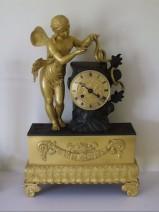 |
| Clock Appraisals |
|
|
Important Message
Items pictured on this web site are mainly used for educational value.
They may or may not be available in our shop.
Please check before coming.
|
 |
| Art Appraisals |
|
|
 |
| Antique Appraisals |
|
|
 |
| Antique Furniture Appraisals |
|
|
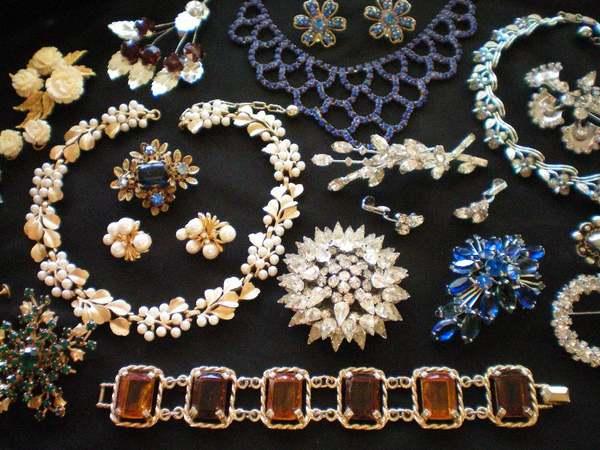 |
| Jewelry Appraisals |
|
|
|
Photography: Daguerreotypes, Ambrotypes, Tintypes, Works on Paper
|
 |
| Tintype value with unusual staged Western scene $50 |
|
|
 |
| Ambrotype value $50 |
|
|
 |
| Daguerreotype value $75 |
|
|
|
Daguerreotypes are the earliest form of photography and can bring the highest prices. The process was introduced in 1839, was widely popular during 1852-1854 and was still in use up until about 1860.
The image is produced on a silver-coated copper plate. So when you have it in you hand it kind of reflects like a mirror. The image of the boy and girl above is an example. Although there are many, many portraits of family members out there what collectors want are unusual scenes of people in their occupations, outdoor scenes, military, etc. They came in various sizes including full plate (about height 8 inches, width 6 1/2 inches) to the more common 1/6 plate size (about height 2 1/2 width 3) and some smaller.
Ambrotype taken apart showing glass
|
Ambrotypes are photographs that are on a glass plate and a black either metal or paper liner is placed behind the glass plate. I took an apart an ambrotype below to show what it looks like. These were introduced in 1854 and were very popular during the 1857-1859 period and used up until about 1865.
I have sold ambrotypes upwards of $5,000 for the unusual outdoor image while a typical portrait of a family member might be $10-$30.
Tintypes are introduced in 1856 and become widely popular and were used up until the introduction of paper around 1867. Tintypes are quite common so there really has to be something very, very unusual about them to command a high price. They came in all kinds of sizes and miniatures that were popular with school classes.
In 1854 the carte de viste is introduced and takes over the photography market. It is widely used from 1860 through 1905 and accounts for most of the photos we see in the old family albums.
Dags, ambrotypes and tintypes can scratch very, very easily so I do not recommend a novice take them out of their cases. A professional can restore them and sometimes a simple cleaning of the cover glass can make a big difference.
The most expensive dag I have sold to date was just over $7,000 for a full plate dag of a family take in Boston, MA. Happy Hunting and have an Aday!
|
 |
| Gems and Jewelry Appraisals |
|
|
 |
| China Appraisals |
|
|
 |
| China, Crystal & Glass Appraisals |
|
|
 |
| Carnival Glass Appraisals |
|
|
 |
| Cookie Jars Appraisals |
|
|
 |
| Decoys Appraisals |
|
|
 |
| Artwork Appraisals |
|
|
 |
| Creamers & Sugar Blowls Appraisals |
|
|
 |
| Appraisals |
|
|
 |
| Art Pottery Appraisals |
|
|
 |
| Militaria Appraisals |
|
|
 |
| Toy Appraisals |
|
|
 |
| Collectibles Appraisals |
|
| |
 |
| Crystal & Glass Appraisals |
|
|
General information and history on a variety of antiques and collectibles.
Click Here
|
Rare or Just Old?
05/06/14
|
Collecting old books? If you are not already an expert understand a few things and terminology about old publications and enjoy the hobby.
Old, rare, out-of-print, "signed by owner", inscribed by owner, "antique" -- what's does all this mean?
Let's stay with the term old for a bit and cover some of the more interesting terms you are likely to run across.
Inscribed by Owner: Handwriting in an old by a former owner of the book. This is not the same as inscriptions written in by the author.
Signed by Owner: Handwritten name of the owner of the book (again, this is generally NOT the same as the author).
Rare: Don't be mislead. A rare book is much more than just old. It must be scarce and desired by collectors. There are books printed in the 1700's that have no real value. They are old and even scarce, but not rare because the demand from collectors is missing. Keep this in mind -- scarce and in demand!
X-Library: Simply means the book has at one time or another been in the inventory of a library (not included is a private library). These will quite often have library stamps, bookplates or labels.
Book Plate: Is simply a printed label affixed to the front inside or flyleaf of a book by a former owner of the book. Book plates often have the owner's name printed on them.
Shaken: When a clothbound book becomes loose in its binding.
By the way... a great resource: Antiquarian Booksellers Association of America
|
| Antique Pricing
05/06/14
Antique Prices:
Treasure or trash? 10 ways to find out.
(This is just a small excerpt from a wonderful article in CNN/Money - the full article can be found at money.cnn.com)
New York (CNN/Money) - That old vase you found in your father's attic could be a fine item for your garage sale. Maybe you could get a six or seven dollars for it. Or it could be a rare specimen worth thousands of value at an auction.
Thanks to the popularity of programs like Public Television's "Antiques Roadshow" Americans are looking more closely than ever at stuff that, a few years ago, they might have unthinkingly taken to the local charity thrift shop or just tossed into a recycling bin never considering the price or value of an item.
It takes an appraiser to value pricing and know whether you've got a one-in-a-million treasure or a run-of-the-mill trinket. But finding such a pro can be daunting for the uninitiated. There is no licensing for appraisers (pricing pros), so anyone can take out a Yellow Pages ad calling themselves an "appraiser." Here are some ways to track down the genuine article and avoid the fakes.
Hire an appraiser to appraise -- nothing more.
Never, ever sell your antiques to the person who's appraising them. Only let them do the pricing and determine the value.
Skip Internet appraisals
Appraisers agree that the Internet is generally not a good place to obtain accurate pricing and value on antique items. A good appraiser will need to see and handle a piece to determine its true value.
Get references
Ask managers at a bank or estate attorneys -- they are a good source for finding a professional, reliable appraiser capable of performing accurate pricing. Another option is the American Society of Appraisers, where members must pass an exam on how to value property and on ethical pricing standards. Senior members must have at least five years of experience and take four classes covering various aspects of appraising and pricing.
Interview several candidates
Once you get some names, search for appraisers who fits your needs.
There is much more to this article and we recommend you check it out.
|
|
Historical Reference on Vintage & Antique Clocks
05/06/14
A BIT OF HISTORY
The attraction to antique clocks is a fascinating one. Our research indicates that these grand old timepieces represent a time period in human history when craftsmanship was a quality much more revered than it is today.
Historical Summary
A concise summary on the history of the clock is difficult. The ultimate in antique clocks today is certainly not a sundial, but indeed this is likely where the history begins. More practically, for purposes of this discussion, the history began with old antique timepieces such as the "pocket watch"
So beginning there lets look at a bit on the origin of the word "clock":
Clokke = Middle English
Clocca = Medieval Latin
Cloc = Celtic and Old Irish
Clugge = Old English
Glocka = Old High German
The English Influence
In the same decade the United States was celebrating their initial fourth-of-July, painted dials for clocks were first introduced in Britain. These painted dials were replacing a centuries old tradition of using brass dials. Clock dial painting began making statements -- they were designed to celebrate events from religion to the Industrial Revolution, to sports and famous war victories.
Replicas Flourish
The English also began making customized antique replicas of tall case clocks. This created antique like high quality affordable product for the masses. What's interesting is that these antique clocks replicas are now themselves antiques! Had it not been for this English movement to create these replicas, it is likely vintage and antique clocks would enjoy the interest they do today.
A History of Antique Clocks in America
Who the first person was in the NEW World that became fed up with the inaccuracy of sand timers and started to make clocks is entirely unknown. Cocks were imported from both England and Holland. These were operational spring mechanisms. These were so expensive that only major settlements could afford them. Few people had a clock in their own house. The first clock-makers were through and through craftsmen. They had to make every part themselves to the precise size. The tools available were often extremely rudimentary. The same person often had to make the clock case too.
Generally they sold too few clocks to make a living so that clock-makers were also locksmiths or
gunsmiths. This combination was particularly popular during the American War of Independence.
After this war there were still far too few people who could afford a grandfather clock and so the makers experimented with smaller clocks. Because a large number of original American clocks were introduced many homes soon had their own clock.
Clockmakers
The names are known of around 7,OOO American clock-makers. Most of these made the usual types of clock but there in the introduction of major innovations In the introduction of major innovations
that they have to be mentioned.
Abel Cottey arrived in America in 1682 on board the Welcome with William Penn (the Quaker leader
whose name is given to the state of Pennsylvania. He may well be the first clock-maker to establish
a business in the colonies. In his workshop in Philadelphia he mainly made longcase clocks that
became known as grandfather clocks.
These grandfather clocks later became very popular and can now be found through America. In common
with other clock-makers, Cottey made the mechanism, the dial, the pendulum, and the weights
himself but left the case to be 1t made by a joiner. These joiners allowed their creativity to run free and many cases are superbly carved in minute detail. Philadelphia proved to be a good place for clock-makers to set themselves up.
Great names such as Christopher Sower, four generations of the Gogas family, the Chandlee family, and Edward Duffiels ring out from Philadelphia. The last of these was a good friend of Benjamin Fran] Duffiels was interrupted so frequently by people asking the time that he made a clock with a face on both sides that he hung outside his workshop. The most convivial clock-makers was David Rittenhouse.
LONGCASE CLOCKS
The grandfather clock was the first clock for the home to be made in America These stately clocks originally known a either tall case or long case clocks can thank their name to the children's song My Grandfather's Clock. The first long case clocks were made in England around 1600 and the earliest known America known American example originated in 1680. The long case was necessary to house the long pendulum. This case was often designed and made by a cabinet maker. The mechanism of the longcase clock was made of bronze and wood. The clocks were mainly driven by weights but wind-up clocks came onto the market later. The dial was often made of bronze with engraved or etched Roman numerals and decoration. The hands themselves often had fine tracery in order to catch the light. Grandmother clocks are a smaller version of the longcase clock and they were extremely popular in the early nineteenth century. They were mainly made by a group of Boston clock-makers including the Willards, Samuel Mulliken, and Levi Hutchins. The grandmother clock was no taller than 1,200mm (48in).
SHELF CLOCKS
Shelf clocks came into fashion in the New World following the America War of Independence (1775-1783). This was because their mechanism was driven by a spring. Such mechanism~: were more complex and hence less accurate and these clocks were often more expensive. Because metal was in short supply during the war mechanism were generally made of wood. The first American shelf clocks are so similar to comparable English clocks of the time that many collector has been confused.
The Massachusetts shelf clock (also known as box on box or half clocks) is no taller than 600mm (24in). The clock is set on a shelf instead of on the ground as is the case with longcase clocks.
The lighthouse clock (originally known 1 as the 'Eddystone' clock) is one of the many innovations of Simon Willard who lodged a patent application for the design in 1822. The glass dome known throughout the British Empire was mounted on a rounded or octagonal base to give the overall appearance of a lighthouse. Because they were intended to be portable, lighthouse clocks had handles attached.
WALL CLOCKS
The 'wag-on-the-wall' clock is also derived from the longcase clock. This ( type of clock was mainly based on the ideas of Isaac Blaisdell for a clock for people for whom the longcase clock was too big. The pendulum is allowed to swing freely outside the case rather like a dog's tail wagging to and fro. The banjo clock was originally named by its designer Simon Willard as an 'Improved Patent Timepiece'.
Despite the patent he was granted on this type of clock it was widely copied. There are some 4,000 genuine Willard banjo clocks. Willard introduced a number of improvements that enable his clock to run for eight days in spite of their weights. The banjo clock was also more accurate than other clocks because the pendulum was suspended in front of the weights. The case was largely made of glass which was decorated with paintings of landscapes, flowers, and noteworthy buildings. This typical American clock is still very popular with the general public The 'girandole' was designed in 1816 by Lemuel Curtis of Concord, Massachusetts.
|
|
|
Rules for Valuing Antiques and Collectibles Like an Appraiser
|
Determining the value of an antique or collectible means more than locating an item in a price guide or auction results. In fact, that's just the beginning of the valuation process. There are a number of factors to consider when deciding how much your antiques are really worth. With a little effort, patience and learning about your favorite antiques categories, along with these guidelines to point you in the right direction, you can learn to value it yourself like an appraisal pro.
1. Don't Overlook a MarkWhether we like it or not, items stamped with a manufacturer or designer's mark are often worth more than identical pieces with no signature. Use a magnifying glass or jeweler's loupe, if necessary, to make sure you don't overlook a mark that may add value and assist you with further research. With hand painted and hand crafted pieces, finding an artist's signature in addition to a manufacturer's mark is a boon. Be sure to examine each piece carefully for these valuable identifying signs.
2. Consider ConditionOne of the most important factors to consider when you value an antique is condition . Even when you locate an item in a price guide, if your piece isn't in comparable condition the point is moot. Take all flaws into consideration including chips, cracks, excessive wear, tears, stains and missing components. Is it a minor nick or major crack? Basically, look for anything that keeps your antique from being in like new or "mint" condition and take that into consideration when determining value.
3. Is It Common or Rare?There are times when an extremely rare antique with condition factors will still be worth quite a good sum. For instance, if you determine that you own a piece of Newcomb pottery with a hairline crack, it may still be worth quite a nice sum. However, if you own a cracked piece of Frankoma pottery, it probably won't hold much more than decorative value. If you're not sure about how rarity plays into the area you're researching, check with an expert in that field before discarding a damaged item.
4. Old Doesn't Always Mean ValuableMuch of an item's value lies in the buyer's demand. There are many items over 100 years old now that aren't in high demand. Take birthday greeting postcards from the early 1900s as an example. Many many of these postcards survived over the years making them too common to hold much value. On the other hand, if you own a hard to find Santa Claus postcard of the same age, it's likely worth more. There are times when a single Santa postcard can be worth $75 or more to an avid collector or dealer.
5. Is it Real or Fake?If an item has been in your family for many generations and you know the provenance, you can feel reasonably sure you're dealing with an authentic antique. But if you purchase an item at a shady flea market, many times you'll have to authenticate it before you can truly determine the value. Look for telltale signs of wear and age, along with discrepancies in marks and signatures. Subtle details can often provide clues to the true age of an object. Use black light testing as a place to start.
6. Has It Been Restored or Repaired?Professional restoration can add value to a rare antique, but amateur repairs affect value negatively in most cases. It's important to evaluate a piece to discern whether it has been haphazardly repaired or the original value-adding "patina" has been removed. If glue is present, solders are easily detected, or chips have obviously been ground down, an antique or collectible should be valued accordingly. Minor repairs may not affect the value of a piece at all. Ask an expert if you're not sure.
7. Does It Have Salvage Value?Just because an antique or collectible is broken or damaged doesn't necessarily render it totally worthless. Many dealers will buy items they can repair or use for parts to repair other pieces. Severely damaged antiques are sometimes transformed by those clever at makeover projects, or crafters will purchase them for supplies. Depending on the extent of the damage and the item's relative usefulness, it may still hold some value. It's wise to check around before banishing it to the dumpster.
8. Consider Current Market InfluencesIf you've located an item in a price guide or auction results, does the information reflect current markets? Prices for antiques and collectibles can fluctuate widely and quickly depending on current demand. Prices may drop down to pre-demand levels once the boom has passed, or they may remain high due to diminished supply as dealers have difficulty replenishing inventories. It's important to watch the markets in your favorite collecting categories and stay on top of value-affecting trends.
9. Ask an Expert Friend for AdviceMany times when you're watching Antiques Roadshow, appraisers will indicate they've consulted with their colleagues when determining values. This happens in the non-televised world, too. Don't be afraid to ask a well-versed friend or a dealer you trust for their opinion. Sometimes your educated judgement will overrule what they've shared, but it's good to get the advice of others when you're feeling a bit uncertain about valuing an item, especially those seldomly seen on the secondary market.
10. Think About Common Values for Common PiecesAppraisers most often value antiques based on the median value rather than the highest or lowest prices realized for similar items. There are times when a piece will sell very high at auction, but the same item will bring a more moderate price at an antique show. In the same vein, items aren't valued based on a bargain garage sale buys either. Rarities are more difficult to value, however. The most recent selling price may be a good indicator of expected market value when pricing a rare item.
|
This website contains, in various sections, portions of copyrighted material not specifically authorized by the copyright owner. This material is used for educational purposes only and presented to provide understanding or give information for issues concerning the public as a whole. In accordance with U.S. Copyright Law Title 17 U.S.C. Section 107, the material on this site is distributed without profit. More Information
Information presented based on medical, news, government, and/or other web based articles or documents does not represent any medical recommendation or legal advice from myself or West Saint Paul Antiques. For specific information and advice on any condition or issue, you must consult a professional health care provider or legal advisor for direction.
I and West Saint Paul Antiques can not be responsible for information others may post on an external website linked here ~ or for websites which link to West Saint Paul Antiques. I would ask, however, that should you see something which you question or which seems incorrect or inappropriate, that you notify me immediately at floyd@weststpaulantiques.com Also, I would very much appreciate being notified if you find links which do not work or other problems with the website itself. Thank You!
Please know that there is no copyright infringement intended with any part of this website ~ should you find something that belongs to you and proper credit has not been given (or if you simply wish for me to remove it),
just let me know and I will do so right away.
|
Website Terms and Condition of Use Agreement
also known as a 'terms of service agreement'
By using this website, West Saint Paul Antiques . Com, you are agreeing to use the site according to and in agreement with the above and following terms of use without limitation or qualification. If you do not agree, then you must refain from using the site.
The 'Terms of Use' govern your access to and use of this website and facebook pages associated with it. If you do not agree to all of the Terms of Use, do not access or use the website, or the facebook sites. By accessing or using any of them, you and any entity you are authorized to represent signify your agreement to be bound by the Terms of Use.
Said Terms of Use may be revised and/or updated at any time by posting of the changes on this page of the website. Your continued usage of the website, or the facebook site(s) after any changes to the Terms of Use will mean that you have accepted the changes. Also, any these sites themselves may be changed, supplemented, deleted, and/or updated at my sole discretion without notice; this establishes intellectual property rights by owner (myself).
It saddens me to include a Terms of Use for West Saint Paul Antiques . Com, but we all realize it is something that is necessary and must be done these days. By using the website, or facebook for West Saint Paul Antiques, you represent that you are of legal age and that you agree to be bound by the Terms of Use and any subsequent modifications. Your use of the West Saint Paul Antiques sites signify your electronic acceptance of the Terms of Use and constitute your signature to same as if you had actually signed an agreement embodying the terms.
|
|
|
 |
| Email me with your feedback on how I can Improve this website. |
|
|
|
|